Maumelle Wood Fence Installation
Wood privacy fences are still the most common choice in Maumelle backyards, and built properly they earn it. Delta Fence puts up cedar and pine from American-sourced lumber, drives screws where plenty of crews shoot staples, and sets every post in concrete. Kade Endl oversees each job, from the first walk along your property line to the last board. We are licensed, insured, and bonded, and you get a written quote first.
Cedar or Pine for a Maumelle Backyard
The first decision on any wood fence is the species, and we build with two: cedar and pine. On installation day they look similar. They age very differently. Cedar carries natural oils that help it resist rot and insects. It also tends to stay straighter as it dries, and left alone it weathers to a soft silver. The catch is cost per board, and on a long backyard run that difference adds up quickly.
Pressure-treated pine is the workhorse. The treatment pushes preservative deep into the wood so it can handle ground contact and damp air, and it is the more affordable of the two. Pine shows up wet from treatment, so it shrinks as it dries, and a few boards may twist during their first stretch outdoors. Screws and sensible rail spacing keep that movement in check. Once pine settles and gets sealed, it looks sharp for a long time.
Color deserves a word too. Cedar goes up with the warm reddish tone many people buy it for, and that tone fades unless a sealer carrying some pigment goes on. Pine starts pale, sometimes with a faint green cast from the treatment, and takes a stain evenly once it has dried out. If a particular color is the goal, mention it on the walk so it can steer the species choice.
Which one fits your yard comes down to how long you plan to stay, how much of the fence you see from inside the house, and what your HOA allows. Some Maumelle covenants spell out a style or finish, so we read yours before recommending either species. One reasonable option is cedar along the patio where you look at it every evening and pine down the back line. Our wood fence service page goes deeper on both.
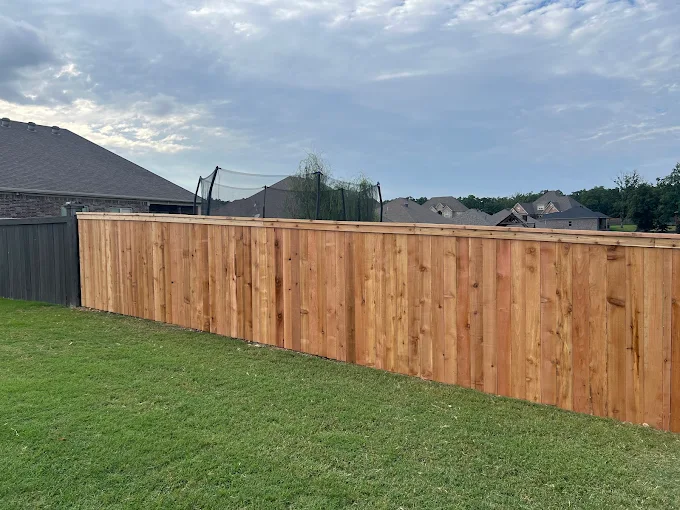
Where the Boards Come From and What Holds Them On
Every board on a Delta Fence job is American-sourced lumber. That matters less as a slogan than as a habit of paying attention to what goes on your fence. Boards get looked over before they are hung, and we would rather set a badly twisted one aside than fight it into a rail and watch it pull loose later.
Then comes the fastener. Staples go in fast, and a lot of fences get built with them. Wood swells when it gets wet and shrinks back when it dries, over and over, every year it stands. A staple has almost no grip to resist that, so pickets slowly work free and start to rattle in the wind. Screws bite into the rail and stay put. They take longer to drive, and they are why a board we hang is still tight after years of Arkansas humidity.
Screws pay off again when something goes wrong. If a limb comes down across a section, the damaged pickets back out cleanly and new ones go in without splitting the rail they share. That holds whether the fence is board-on-board, shadowbox, picket, or split-rail. The fastening is the same on every style we build, because the weather here treats them all the same way.
Clay Soil Is Why Every Post Gets Concrete
Plenty of ground around here is heavy clay. Clay swells when it soaks up rain, then shrinks back and cracks when summer bakes it dry. A post tamped into bare dirt gets shoved around by that cycle season after season. It feels solid when the crew packs up, and it begins leaning toward the neighbor after the yard stays soggy for a while.
So every post on our jobs is set in concrete. The concrete gives each post a wide footing that the clay cannot easily push sideways, and we shape the top so rainwater sheds away from the wood instead of pooling against it. How deep a post goes depends on the fence height and how much wind the run will catch, so we dig to suit your fence instead of to one number for every yard.
Posts are also the reason people call us about an old fence. When a subdivision fence reaches the age where posts rot at the ground line, the boards can still look fine from the patio while the whole run slowly tips. That raises the real question: fix it, or start over?
If a few posts have failed and the rest of the line is sound, replacing those posts and a handful of boards makes sense. If most posts are soft, the rails sag, and pickets are splitting from one end to the other, patching only spends money on a fence that is coming down anyway. We walk it with you and point to which situation you are in.
Before the First Post Hole Gets Dug
Style, height, and placement rules change from one subdivision to the next, so we read your covenant before recommending a design. The rest of the groundwork happens on a free visit to the yard, where we measure the run, note the gates you need, and look at how the ground falls from one corner to the other.
Owner Kade Endl oversees Delta Fence projects, and we answer for how the finished fence looks and how straight it stands. Afterward you get a written quote naming the species, the style, the posts, and the gates, so there is no guessing later about what you agreed to.
The First Year a New Fence Spends Outdoors
Fresh lumber changes after it goes up, and knowing what to expect keeps you from worrying about the wrong things. Pine lightens in the sun. Small checks can open along the grain, and a picket may twist slightly as the treatment dries out of it. All of that is normal movement, and the screws keep the boards fastened to the rails while it happens.
The common mistake is sealing too soon. Treated pine is still full of moisture when it is installed, and sealer brushed onto wet wood sits on the surface and peels. Test instead of guessing: flick some water onto a board. If it beads up, wait. If it soaks in and darkens the wood, you are ready. Cedar starts out drier and can usually be sealed sooner, or you can let it go silver if you like that look. Either way, check the covenant first, since some subdivisions care what color a fence ends up.
After that first coat, the fence lets you know when it wants another. Water stops beading and starts soaking in again, or the sunny side turns noticeably lighter than the shaded side. That is the signal. Wash off dirt and mildew, let the boards dry, then recoat. A fence kept on that rhythm holds its color and keeps water out of the grain far better than one left to fend for itself.
If you already know staining is a chore you will skip, vinyl gives you a solid fence with nothing to reapply. Screening a pool or patio? Our privacy fence page walks through the styles. A dog run or side yard is simpler with chain link, and property managers on Maumelle Boulevard can read about commercial fencing. Past jobs are in our gallery, and when you are ready, tell us about your yard.
Wood Questions People Ask on the Walk
Is cedar worth it over treated pine?
It depends on how long you plan to stay and how much of the fence you look at. Cedar resists rot on its own and weathers to silver. Pine costs less and holds up well once it is treated and sealed. Plenty of yards do fine with pine along the back line.
Why do you use screws instead of staples?
Wood swells and shrinks with Arkansas humidity, and staples lose their grip as that happens, so pickets loosen and rattle. Screws hold through the movement. They also let us back out a damaged board and replace it later without splitting the rail it is fastened to.
When should I seal a new wood fence?
When the boards will absorb water. Sprinkle some on a board: if it beads, the wood is still too wet and sealer will peel. If it soaks in, go ahead. Cedar is usually ready sooner than treated pine, which comes off the truck carrying a lot of moisture.
Can you build a wood fence near Lake Maumelle?
Yes. Lake Maumelle supplies drinking water to the Little Rock metro, and properties close to it can carry extra setback or buffer rules. We look into what applies to your lot before the layout is set, so the fence respects those lines and still encloses the ground you want.
Should I repair my old fence or replace it?
If a few posts have rotted and the rest of the run is solid, repair makes sense. When most posts are soft, the rails sag, and boards are splitting along the whole line, replacement is the better use of your money. We will show you the failing posts on site.
Will gaps open between the boards as the wood dries?
On a fence with boards butted side by side, treated pine shrinks as it dries and thin gaps can show up during its first stretch outdoors. Board-on-board overlaps each picket across the gap beside it, so the screen stays solid after the wood settles. If full privacy matters to you, that is the style to ask about on the walk.
From the Lake’s Edge Across Town
Plenty of the calls we take on the western side of town start with an old wood fence on a lot near the lake’s edge. The posts have gone soft, a section leans, and the owner wants to know whether it can be saved. We look at the posts first, since they decide the repair or replace call, and if the answer is a new fence we check the buffer and setback rules that can apply near Lake Maumelle before laying out the new line. Everything else we do locally is on our Maumelle page.
Other Maumelle Fence Pages
Maumelle Vinyl Fences
Solid panels in white, tan, or gray that never need paint or stain.
Vinyl fences →Maumelle Privacy Fences
Full-height screening for backyards, pools, and patios, planned around your covenant.
Privacy fences →Maumelle Chain Link Fences
Practical mesh fencing for pets and property lines, galvanized or coated.
Chain link →Maumelle Commercial Fencing
Heavier fence and gate work for businesses along Maumelle Boulevard.
Commercial fencing →Show Kade the Yard, Leaning Boards and All
Starting from bare lawn or staring at a subdivision fence that has given up, call or send your address and we will set a time to walk it with you. You get a written quote naming the species, the style, and the gates, plus a straight answer on repair versus replacement if an old fence is involved. Nothing gets ordered until you have read it.
(501) 626-7024 kadeendl@gmail.com Get a written wood quote