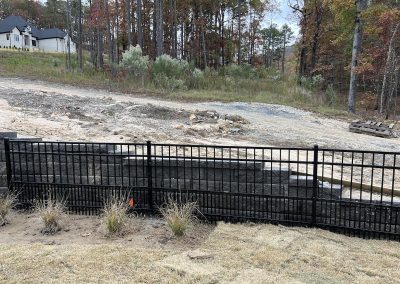
A Metal Picket Fence at the Foot of a Block Wall
The short version: The strip at the foot of a new block wall is some of the least settled ground on a graded lot, and it carries the wall’s drainage. A black picket fence along it looks sharp for years if the posts allow for that fill, the water has somewhere to go, the planting bed is laid out with the fence in mind, and the trimmer and the grasses are kept off the bottom rail.
If your lot was cut into a slope and a stacked block wall holds the upper yard, the bottom of that wall is a natural place for a black picket fence. It frames the planting bed, marks the edge of the yard and keeps the front of the house open to view. It also sits where the builder’s fill was placed last, where rainwater leaves the wall, and where the string trimmer and the ornamental grasses meet the metal. Those four things decide how the fence looks a few years on.
Fill That Has Not Finished Settling
When a lot is graded and a wall goes up, the space at the foot of the wall is often backfilled and smoothed near the end of the job. That loose material compacts over the following seasons as rain soaks in and dries out. Sod or mulch on top can make it look finished long before it is.
A post set only in that fill can tip as the ground firms up around it. We dig through to firmer soil wherever we can and set every post in concrete, so the footing stands on something that has stopped moving. Where the fill runs deep, a larger footing helps.
Expect the surface to sink a little along the fence line over the first year or two. Topping off the bed with soil or mulch keeps the bottom gap even and covers any low spots that open up near the posts. Our Bryant ornamental fence page covers the picket styles and layouts we build.
Where the Water Comes Out of the Wall
A retaining wall holds back soil, and that soil holds water. Most block walls are built to let that water out, either through gaps near the base or along a drain behind it that empties at one end. After a heavy rain, the foot of the wall can stay wet for a day or more.
Before we lay out the fence, we walk the base of the wall after you tell us where it runs wet. A post should never sit in the path where water leaves the wall, and the fence line should not dam it up with a mound of mulch or a row of edging.
If water pools along the fence, a strip of gravel at the base of the wall can carry it off, or a small swale can lead it toward the yard’s drainage. Water that sits against the bottom rail all season is hard on any finish, so getting it moving helps the fence as much as the wall.
Laying Out the Planting Bed With the Fence
Most of these fences end up with plants on one or both sides. Decide early whether the bed sits between the wall and the fence, in front of the fence, or both, because that sets how far the posts stand from the wall.
Leave yourself room to work. A bed squeezed between the wall and the pickets with no way in becomes a strip nobody weeds. If the bed sits behind the fence, a gate at one end or enough width to reach over makes upkeep possible.
Keep plants off the post locations. Shrubs and grasses planted right where a post has to go either get moved or force a shorter panel. If a landscaper is planting the bed, share the post layout with them before anything goes in the ground, and ask them to keep root balls clear of each footing.
Keeping the String Trimmer Off the Bottom Rail
A black finish on metal holds up to weather for a long time. What wears through it fastest is a string trimmer. A few passes a week along the bottom rail and the base of each post will strip the coating in a single season, and on steel that bare spot rusts.
The fix is to give the trimmer nothing to do there. A band of mulch or gravel under the fence, held by a low edging set back from the pickets, lets the mower run along the edge and keeps grass from growing up against the metal. On the lawn side, a mowing strip wide enough for one wheel works well.
If a rail does get nicked, touch it up soon. A small brush and paint in the fence’s finish color cover a chip before it spreads.
Cutting the Grasses Back
Ornamental grasses look right along a black picket line, and they grow fast. By late summer they lean into the pickets and push through the gaps, and dead stems stay tangled in the bottom rail all winter, holding moisture against the metal.
Cut them back once a year, before new growth starts in late winter or early spring, and pull any stems caught in the panels while you are there. Plant new grasses far enough from the fence that a full-grown clump still clears the pickets.
A rinse with the hose after pollen season and after the bed is mulched keeps dirt and splashed soil from building up along the bottom rail.
Questions About Metal Fencing at a Wall
Will a picket fence keep my dog in the yard?
It can, if the picket spacing is tight enough for the dog and the gap at the bottom stays small. Along fresh fill that bottom gap can open as the ground settles, so top off the bed when you see it. Tell us about the dog when we walk the line, and we will plan the panels around it.
How soon can we plant along a new fence?
Once the posts are set and the concrete has cured, the bed is yours. We can leave the soil along the line loose and level for planting. Keep root balls clear of the footings, and keep fast-spreading plants back far enough that they will not grow into the pickets.
Can plants grow right up against the pickets?
They can, but the fence pays for it. Leaves and stems against the metal hold water, hide chips in the finish and make the bottom rail hard to reach. A small gap between the plants and the pickets keeps the finish dry and lets the black line of the fence show.
Put a Finished Edge on a New Lot
A block wall with a clean picket line in front of it makes a new house look settled in. Contact us to walk the lot together, and the Bryant fence company page covers everything else we build here.
New Wall, Bare Edge?
Show us the wall, the grade and the planting bed. We will lay out the posts around the water and the plants before anything is ordered.
Call Kade (501) 626-7024 Plan the picket run