Alexander Chain Link Fences
When the line you want fenced is measured in acres instead of feet, wood boards turn into a slow, heavy job. Chain link covers the distance with far less to work loose. We run galvanized mesh along open boundaries, black vinyl-coated mesh through shaded backyards where it blends in with the trunks, and barbed-wire arms around equipment and business yards that need a harder edge. Every post goes in concrete, dug to depth in the clay.
Where Chain Link Beats Wood on a Long Boundary
Picture a property line that runs several hundred feet down the side of a field and back along the road. Built in wood, that line means hundreds of boards, and every board is a fastener that can loosen and a face that will weather and cup. Built in chain link, it means mesh stretched tight between posts, with very little a hot summer and a soggy winter can pry apart.
That is the trade we talk through on most larger Alexander lots. Close to the house, where people want privacy from the road or a neighbor, wood or vinyl still makes sense. Out along the boundary, where the job is marking the edge, holding animals in or keeping people out, chain link does it with less upkeep. It also stays see-through, so a long line never turns into a wall across your land.
On long galvanized runs the corners and ends do the hard work. Those terminal posts carry the pull of the whole stretch, so we brace them and set them deeper in concrete than the line posts between. Our chain link fences page covers what we install around Central Arkansas.
Choosing Between a Top Rail and Tension Wire
Every chain link fence needs something holding the top edge of the mesh. Without it, the fabric sags between posts and rolls over the first time somebody leans on it. There are two common ways to handle that, and on a long run the choice shows.
A top rail is steel pipe running across the tops of the line posts from one terminal to the next. It stiffens the whole fence, keeps the posts aligned with each other and gives the mesh a firm edge to tie to. In a backyard, beside a driveway, or anywhere people and dogs will push on the fence, we usually want a top rail.
Tension wire is a heavy wire pulled tight between terminal posts in place of the rail. It has less to it and reads lighter across open ground, which some owners prefer along a pasture or a back boundary where nobody leans on anything. We also run a tension wire along the bottom of most fences, rail or no rail, so a dog pushing at the base or brush growing against it cannot bow the mesh outward.

Black Coated Mesh Through a Wooded Yard
Plenty of Alexander backyards run up against trees, and bright galvanized fence through the woods catches the light every time you look out the window. Black vinyl-coated chain link sits back into the shade. From the porch, you notice the trunks before you notice the fence.
Building through trees takes more planning than building across a field. We walk the line first and mark where each post can go without landing on a big root, then shift the spacing a little so the fence weaves between trunks instead of fighting them. We never fasten mesh to a living tree. The tree keeps growing, the fence keeps pulling, and both end up hurt.
The coating wraps the steel wire, so a black fence stays black and the mesh is a little kinder to hands and paws. Posts, rails and fittings come in black too, which keeps anything shiny from breaking up the line. Leaves and the odd branch will land on it, one more reason we want every post in concrete holding the fabric tight.
Barbed Wire Arms on an Equipment Yard
Some Alexander properties are not homes at all. A contractor’s yard, a business lot, or any place where equipment and materials sit overnight needs a perimeter that says plainly the fence is not for climbing. For those, we fit barbed-wire arms to the tops of the posts and run strands of barbed wire along them.
The arms can lean out toward the road or in toward the yard. Leaning out keeps someone outside from getting a grip on the top. Leaning in keeps the wire over your own ground, which matters when the fence sits tight to a property line or a road edge. We settle which way before anything is ordered, because changing it later means new arms on every post.
A security fence is only as good as its weakest stretch, so the same height and wire carry through to the gates and up to every building the fence meets. If your yard also needs a wide drive gate, our secure gating page for Alexander covers the steel-framed gates we hang for business lots.
Following the Grade Beside a Gravel Road
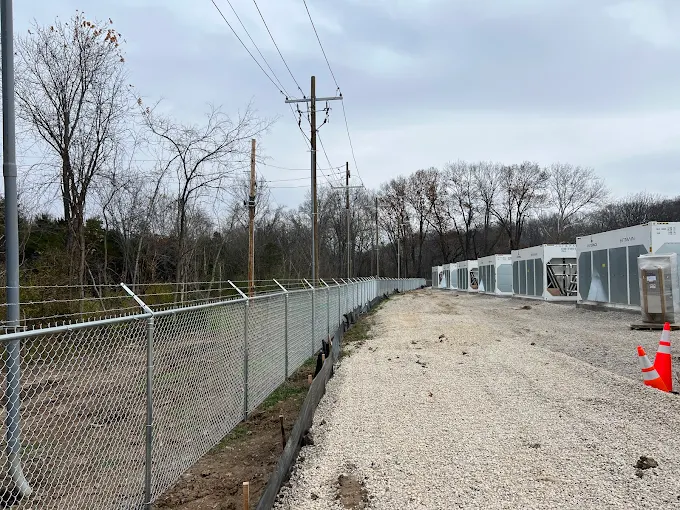
Rolling ground is normal around Alexander, and plenty of fences here run alongside a gravel road or drive that rises and dips with the land. Chain link handles that better than most fence types. The mesh flexes, so instead of stepping down in stair-like panels, it can follow the ground as it goes.
The real work is keeping the bottom close to the dirt the whole way. Over a rise, the mesh wants to lift off the high spot. In a low spot, a gap opens underneath that a dog can squeeze through. We set each post to the ground under it, pull the mesh in shorter stretches where the grade changes fast, and fill the worst dips so the bottom wire stays snug to the soil.
Gravel road edges bring water. Rain sheets off the road and soaks the clay right where the posts stand, so we keep posts back from the ditch line where we can and set every one in concrete at full depth. A post that holds beside a wet ditch will hold anywhere on the property.
What We Check Before a Chain Link Run Is Done
- Corner, end and gate posts braced and set deeper in concrete than the line posts
- Mesh stretched tight enough that it does not belly between posts
- Bottom tension wire held close to the ground across rises and low spots
- No mesh, wire or fittings fastened to a living tree
- A final walk of the whole line with owner Kade Endl
Chain link and other fence lines we have finished are in the project gallery. If you have a survey or plat showing your boundary, send it over with your address and we will plan the run from it.
What Alexander Owners Ask About Chain Link
How tall should a chain link boundary fence be?
It depends on what the fence is for. A lower fence marks a line and holds most dogs. A taller one suits a backyard where people want more separation. Business and equipment yards usually go taller still, often with barbed-wire arms on top. We help you pick a height before anything gets ordered.
Is black vinyl-coated chain link worth it over galvanized?
That comes down to where it goes. Out in the open along a field, plain galvanized does the job and few people notice it. In a wooded backyard or close to the house, black coated mesh fades into the shade and looks finished. Many owners use both on one property.
Can chain link follow hilly ground?
Yes. Chain link mesh flexes, so it can follow rolling ground instead of stepping down in panels. We set each post to the ground under it and pull the mesh in shorter stretches where the slope changes quickly, so the bottom stays close to the dirt and gaps do not open up.
Do I need a permit for chain link in Alexander?
It depends on where your property sits. Land inside city limits and land under Saline County can have different rules for setbacks, height and easements. We handle the research and the permit side for you, so the fence goes in where it is allowed and you are not chasing paperwork.
Can you add barbed wire to a fence I already have?
Often, yes. If the posts are solid and set in concrete, we can fit barbed-wire arms to the tops and run new strands. If posts lean or the top rail is bent, we fix that first, since the arms add weight and leverage at the top of every post.
Can chain link run through trees without hurting them?
Yes, if it is laid out carefully. We walk the line, place posts away from large roots and weave the fence between trunks. We never attach mesh or wire to a living tree, because the tree keeps growing and the fence ends up pulling against it or buried in the bark.
Fencing Larger Lots Across Alexander
A boundary off Highway 5 South gets the same post depth and the same tight mesh from us as one by the Saline River or out along Collegeville Road. For wood, vinyl and the rest, see the Alexander fence page. Long boundaries often come with other projects: a dog run beside a shop, a custom wood fence closer to the house, or repairs on an older line you plan to keep. Kade answers at (501) 626-7024 if you would rather describe the land over the phone first.
Other Fence Work We Do in Alexander
Alexander Dog Kennel Fences
Coated chain link runs with a walk gate that latches.
Dog kennel fences →How Far Does Your Line Run?
Rough footage helps, and so does a survey if you have one. Tell us what the fence has to do, whether that means keeping a dog home, marking a boundary or closing in an equipment yard, and where the ground turns steep or wooded. We come out for a free on-site visit and walk the line with you, then send a written quote laying out the mesh, the posts and any gates. The license, the insurance and the bond are all current, and we can send copies with the quote.
(501) 626-7024 kadeendl@gmail.com Get a written quote for your line